How to Communicate Your Wedding Dress Code Clearly
By Caitlin Hoare
Nothing derails the vibe of your wedding faster than dress code confusion. Guests want to look their best, but terms like “black tie optional” or “garden chic” can leave even the most stylish friends second-guessing themselves. The good news? A clear, well‑worded dress code takes the guesswork out of getting dressed and sets the tone for your big day. In this guide, we’ll show you exactly how to communicate your wedding dress code so your guests feel confident, comfortable and perfectly in tune with your celebration.
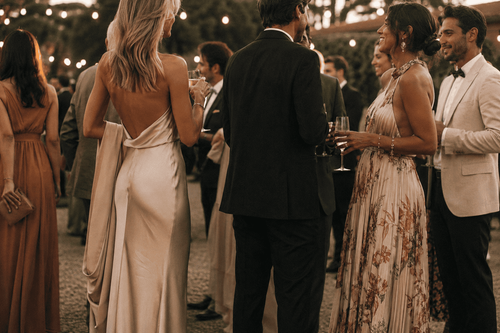
If there's one thing that can cause more guest confusion than the seating plan, it's the dress code. We've all been there, staring at a wedding invitation and wondering if "black tie optional" means you should don a ball gown, a cocktail dress, or whether pairing your power suit with a nice pair of dress shoes will be enough. Whilst your wedding day is about so much more than outfits, the truth is that what people wear does create a vibe. A formal dress code can lend a luxe atmosphere, whilst a casual dress code is going to lead to a different feel altogether. If you want your big day to feel cohesive, then getting everyone on the same page is the key, but how on earth do you do that?!
Well, firstly, communicating your dress code isn't rocket science! It's all about striking the right balance of thoughtful dress code wording, clear communication, and perhaps a few practical suggestions. With this approach, your wedding guests will be left feeling confident about what to wear, and your Uncle Bob won't be rocking up in a linen suit to your black tie wedding! In this article, we'll break down exactly how to convey your wedding dress code plans in a way that keeps things stress-free, stylish and easy for everyone.
Choose the Right Dress Code for Your Day
It goes without saying that before you can explain your own dress code, you've got to decide on it! The world of dress codes can be a bit overwhelming, spanning everything from white tie attire (the most royal formalwear possible) to a smart casual dress code (think collared shirt, dressy separates, or a nice summer sundress). Many couples fall somewhere in the middle, opting for a semi-formal dress code or black tie attire.
Confused? We know we are! Here's a quick refresher on what these terms mean — and if you want to go deeper, our ultimate guide to wedding dress codes walks through each one in detail:
- White tie: ball gowns, floor–length gowns, bow tie, and the formal white shirt with tails. To be honest, a white tie celebration is pretty rare, but if you want to go super fancy, then this one is for you!
- Black tie dress code: put simply, an evening gown for women, and tuxedos with a bow tie for men.
- Black tie optional: gives your loved ones some choice: formal attire like an evening gown or tux is welcome, but a cocktail dress or a dark suit is perfectly fine too.
- Semi-formal attire: a knee-length dress, midi dress, or smart separates for women; dress shirt with tie or lounge suit for men.
- Cocktail attire: dressy but not floor length. A knee-length cocktail dress or smart midi dress is perfect here.
- Smart casual: exactly what it says. Think button-down shirt and dress shoes, or a dressy jumpsuit.
- Casual attire: perfect for an outdoor or garden wedding. Guests might wear a flowy beach dress or summer sundress, or a shirt with shorts for the guys.
Your dress code sets the tone for the whole day, so choose what works best for your wedding theme, venue, and the vibe you're going for.
Consider the Venue and Timing
It's essential to consider whether your dress code expectations align with the significance of your big day. After all, a black tie wedding in a rustic barn might feel like a bit of a mismatch; equally, a beach casual vibe in a grand ballroom doesn't quite fit!
Daytime weddings tend to suit a range of dress codes, from casual to cocktail attire, while evening weddings lean more towards black-tie attire. For an outdoor wedding or beach celebration, dressy flats, flowy dresses, and summer suits might be more appropriate; while a formal affair at an upmarket venue is the perfect match for a floor-length gown and dark suit. Of course, these are just guidelines, and if you love to buck tradition, then there's nothing to stop you mixing things up!
Use Clear Wedding Dress Code Wording
There's a time and a place for getting creative during your wedding planning, and communicating your wedding day dress code isn't it! While it might be tempting to go rogue and make up your own terms to fit the vibe of your wedding day, like "garden chic" or "rustic glam", nobody is going to have a clue what that means! Stick to commonly used dress codes that your guests can easily Google, and then, taking inspiration from the explanations above, add a sentence or two of dress code information to clarify. If you need some help with phrasing, our guide to digital wedding invitation wording has plenty of examples you can borrow.
Remember, you don't need to be super specific when it comes to telling guests what to wear - this isn't about dictating their outfit choices, but rather gently guiding them to the right decision! Of course, if you're having a themed wedding that requires some form of dress code cohesion, then go ahead and be more specific.
Put Dress Code Details in the Right Places
Your wedding dress code is a piece of essential information that your guests may need reminding of, so you'll want to ensure it's shared in more than one place so nobody misses it. The wedding invitation is a natural place to mention it, but your wedding website is where you can really provide all the important details.
Use your wedding site to its full potential as an information hub for your wedding day, and expand on your invitation's language with a bit more practical advice. You could:
- Provide your guests with some venue guidelines: Are there grass lawns, gravel, or uneven surfaces that might impact their choice of footwear?
- Offer inspiration: Clarify exactly what you mean by "formal attire".
- Share multi-day dress codes: If you're hosting multiple events, such as a rehearsal dinner or post-wedding brunch, this is the perfect place to inform guests about any dress codes applicable to those events.
For more ideas on what to include, take a look at our complete guide to wedding website must-haves.
Double Check Everything
Finally, it's essential to ensure the dress code information is consistent on both your wedding invitations and your wedding website. Making sure everything is crystal clear now isn't just good wedding etiquette; it saves you from having to field a bunch of "What should I wear?" texts in the weeks before your big day. With the right dress code wording and a bit of thoughtful advice, you'll set your guests up to feel calm and look incredible against the perfect backdrop of your beautiful wedding day.
Remember, the goal isn't to be strict for the sake of it; it's to make sure that your wedding day feels cohesive, your photos look amazing, and your guests feel comfortable and appropriately dressed. Everyone will relax and enjoy things just that little bit more if they know exactly what's expected of them, while you'll be able to focus on the things that matter most, like what you're wearing!